EL.GGoDo over the years used many different reproduction processes so that he could keep a large collection of originals. The reproduction processes used that I am aware of are as follows:
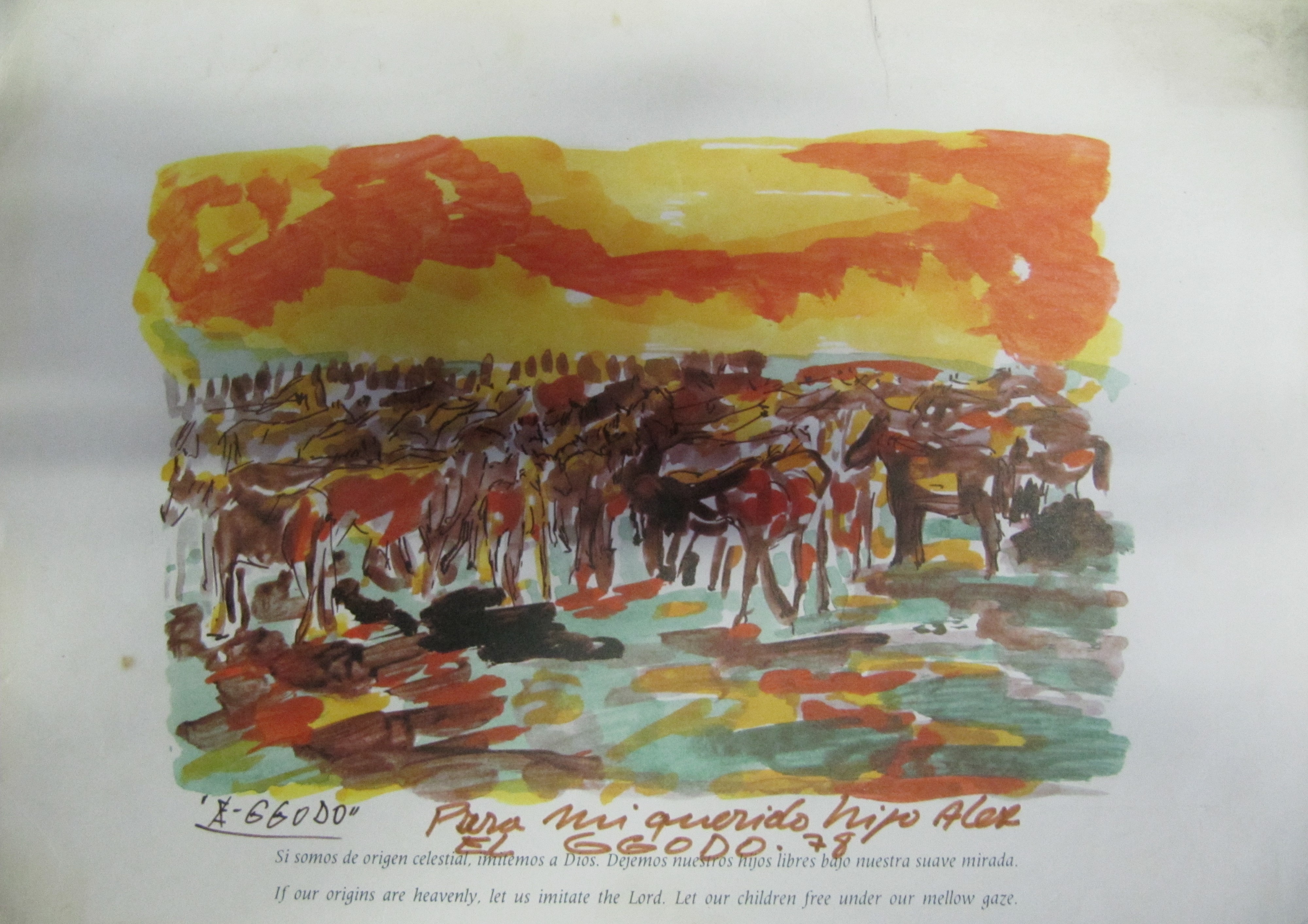
- Lithography ( 1970s )– In the early 1970 and perhaps before he used the Lithographic technique onto paper or cardboard.
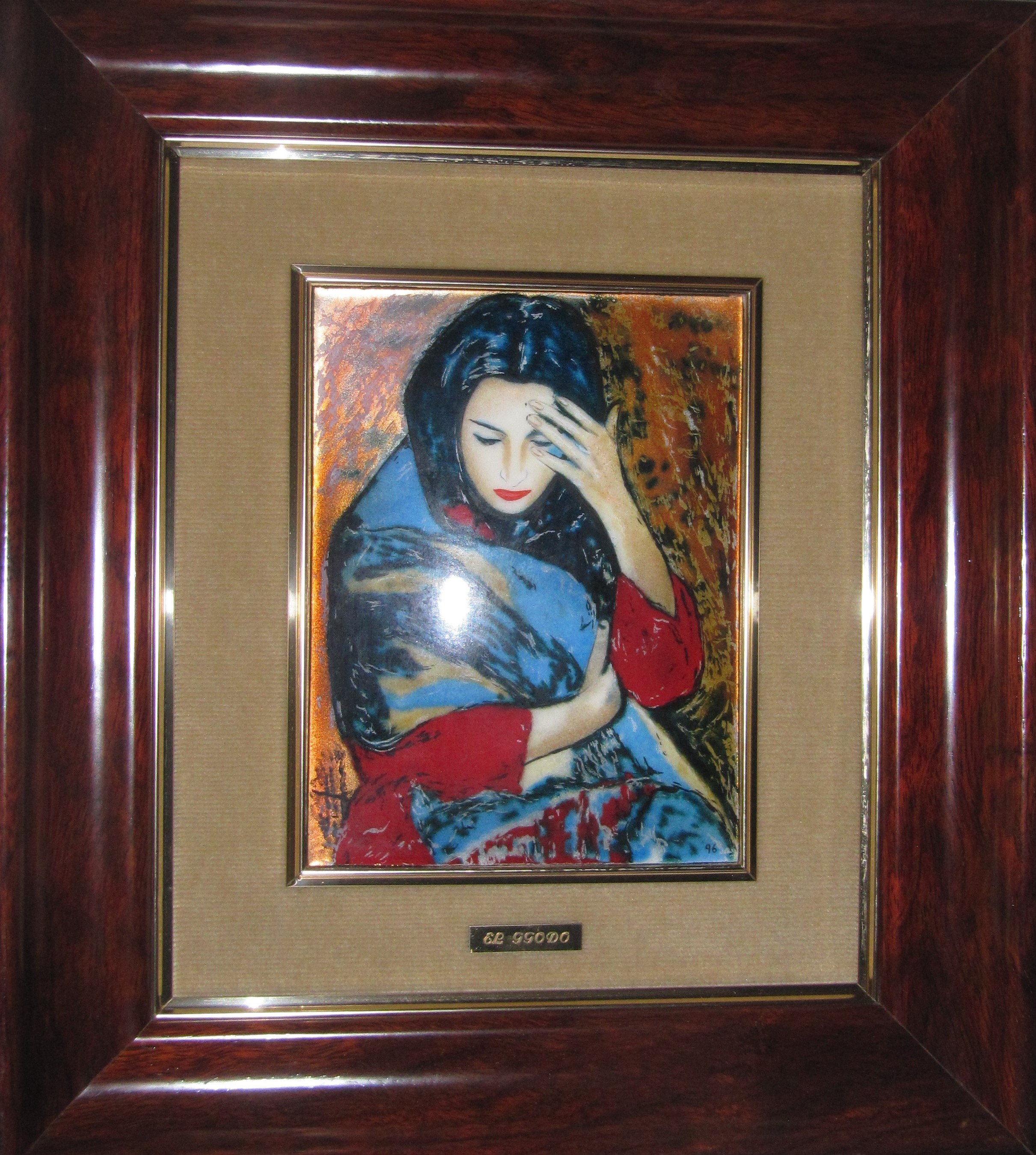
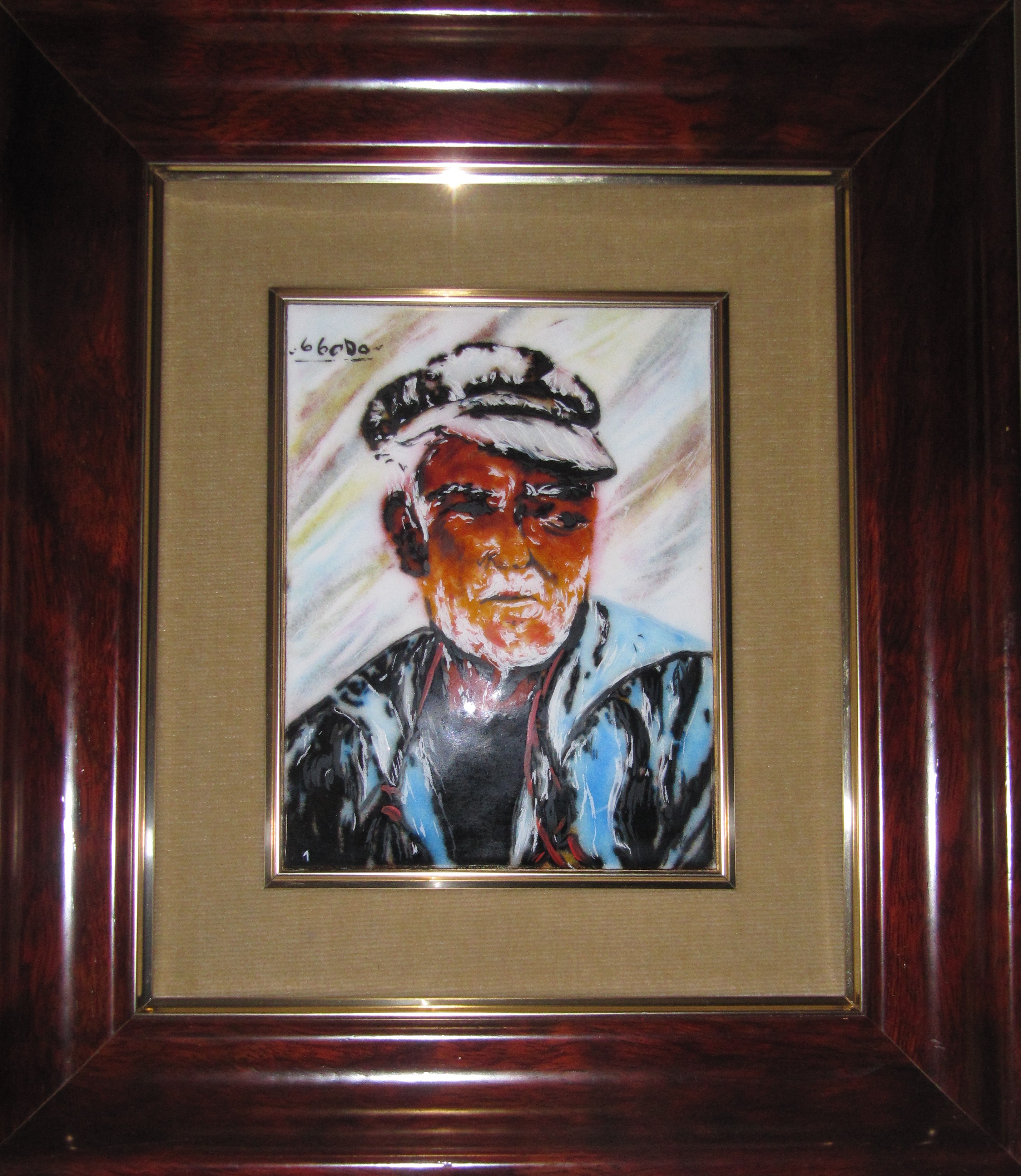
- Polyenamel or poliesmalte (Late 1970s – 2000s? maybe longer) – My father did not invent the chemical called polyenamel, instead he invented process by which you use the chemical to make artistic reproductions using photographic means. I was there in the basement of his Madrid apartment where he showed me as a child, along with one other and his colleague how the process worked. My father was always very creative and inventive, few people gave him credit.
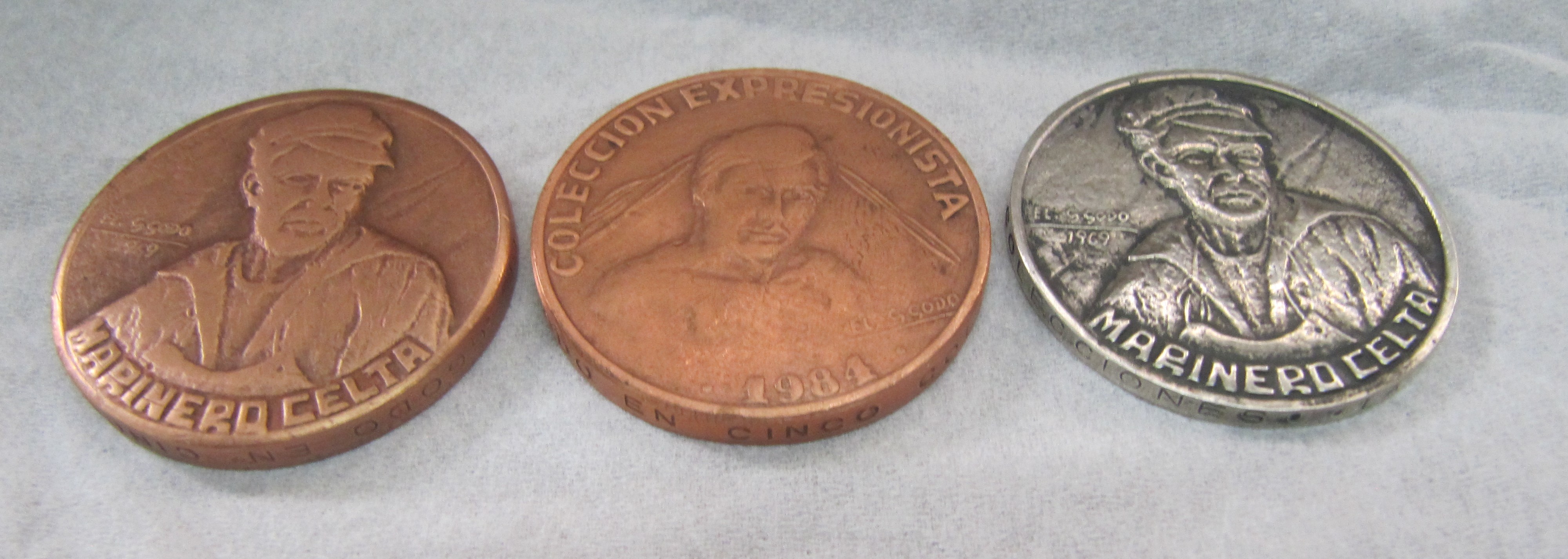
- Copper and silver coins ( mid 1980’s ) – EL.GGoDo had dies made so that he could mint his own coins of his own design. One side had the Celtic Sailor and other side had a self portrait. Around the edge had celebrating 5 artistic collections…something like that. Fabulous for the ego. Although, there was only a small number produced. My school friend Leon Hunter-Boyd and I sold some in the famous EL Rastro Flea Market in Madrid in 1985 for 500 pesetas each!
Catalogue from circa 1979 of selected EL.GGoDo works produced as “poliesmalte” or polyenamel. In 1985 they were being sold at the El Corte Ingles department store in Madrid, thanks to the efforts of Enedina and friends.
On the back of each polyenamel copy of EL.GGoDo’s works was this inscription:
“This ‘polyenamel’ has been taken from a work by -EL GGoDo- it is a perfect mass made reproduction, placed on a metal plating and later polyenameled.
The Goth was born on Earth, from Slavonic-Celtic womb, of a Gothic-Basque-Hebrew-Spanish father. It has a normal appearance at birth received the power to penetrate into the secret of things, a fruit of which is a continuous creation.” The inscription was in 5 languages, namely: Spanish, English, French, German and Russian.
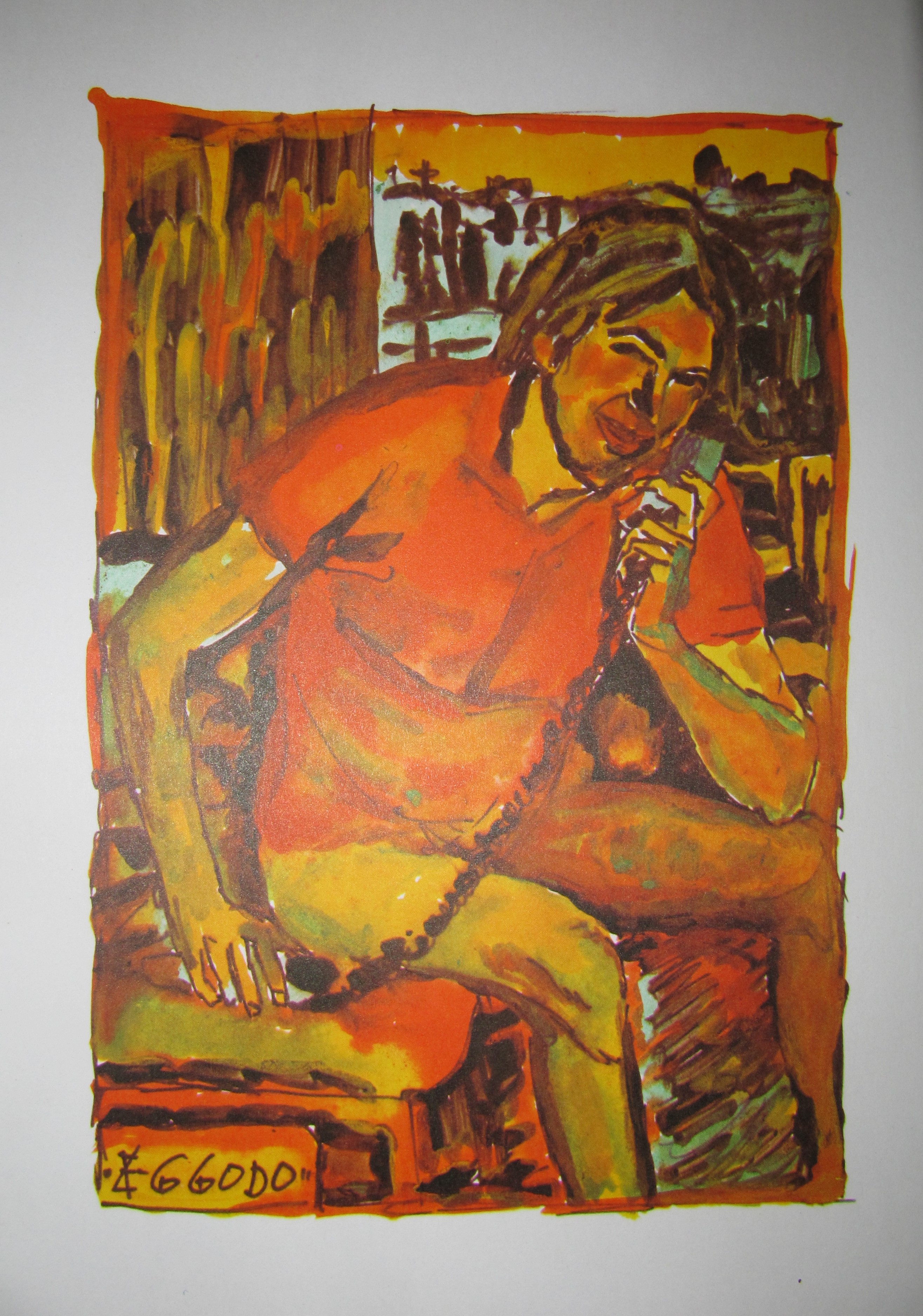
Examples of Reproductions (Below)
Designed with WordPress
 ELGGoDo.com